Why Is St. Augustine Known For Ghosts?
The historical answer behind St. Augustine's haunted reputation: 450-plus years of colonial conflict, epidemics and fires, plus a storytelling tradition that turned that record into a nightly industry.
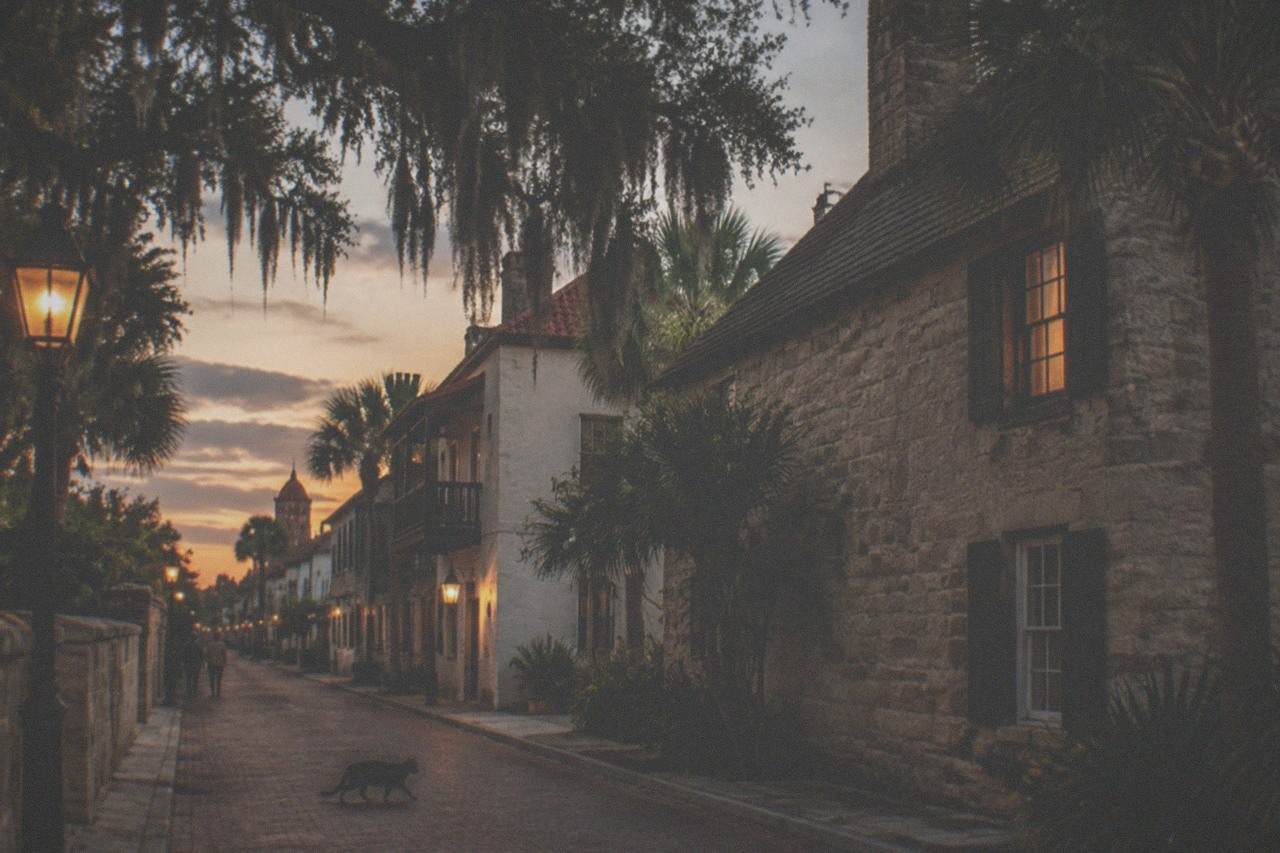
Why Is St. Augustine Known For Ghosts?
St. Augustine carries its haunted reputation for reasons that are mostly checkable: it is the oldest continuously occupied European-founded settlement in what is now the United States, founded by Spain more than 450 years ago, and nearly every era since has left behind siege casualties, epidemic graves, prison deaths and fire losses. The ghost stories came later, as guides and legend-keepers attached names and narratives to a genuinely violent historical record. The city's modern tour industry, one of the densest in the country, keeps those stories in circulation every night of the year.
The short version is that the reputation is earned by history and amplified by storytelling. A town that survived sieges, passed between empires, lost hundreds to yellow fever and ran a jail with eight documented hangings accumulates a lot of material. Add a tourism economy built on those very streets, and the legends get a nightly retelling. For the verdict side of the question, our is St. Augustine haunted guide weighs the claims; this piece explains where they come from.
Why Is St. Augustine Known For Ghosts?
St. Augustine is known for ghosts because it pairs the deepest colonial history in the continental United States with a long-running storytelling tradition. Founded more than 450 years ago by Spain, it survived sieges, epidemics, fires and a succession of imperial flags, and its tour operators have spent generations turning that documented record into named hauntings told nightly on the original streets.
The founding is the anchor. When the Spanish admiral Pedro Menéndez de Avilés landed on this coast and established the settlement, he created the oldest continuously occupied European-founded city in the present-day United States, decades older than the first permanent English settlements up the coast. A place with that much continuous habitation has simply had more time than anywhere else in the country to accumulate deaths, disasters and dramatic exits.
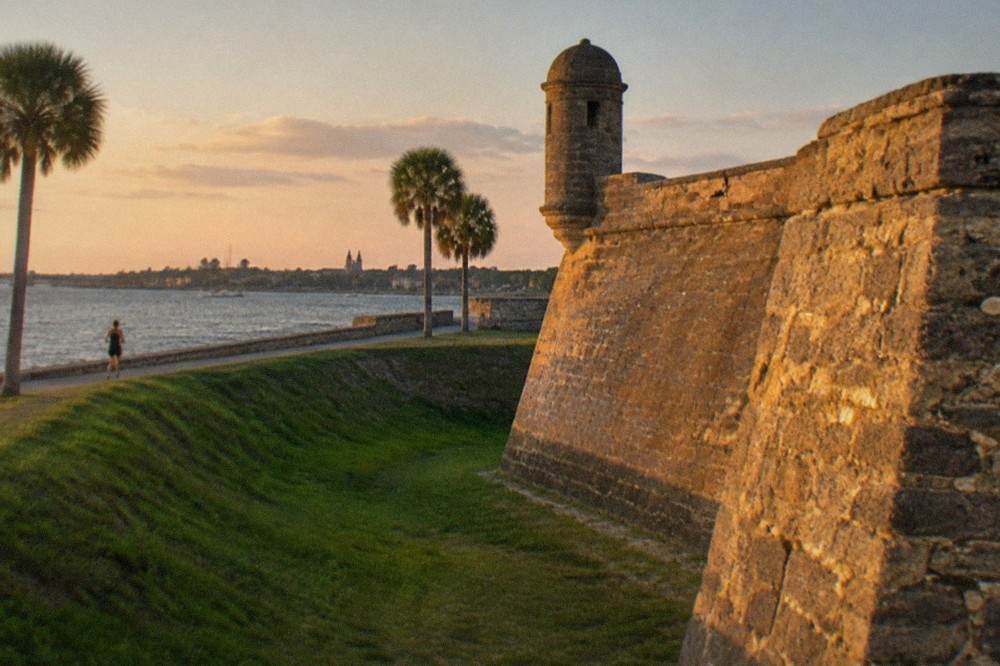
Then there is the layering. Spanish rule, a British occupation, a return to Spain, then the United States: each transition left soldiers, prisoners and displaced families in its wake. The Castillo de San Marcos, the coquina fort on the bayfront, was never taken by force despite repeated sieges, but its dungeons held prisoners under conditions that later guides describe vividly. The National Park Service records the fort's plain operational facts, hours from 9 a.m. with last admission at 5 p.m. and a $15 entrance pass for ages 16 and up, on its official hours page. The soldiers and the woman in white sometimes called "Delores Marti" belong to the legend layer, attributed to tour operators and sources like Legends of America, not to the Park Service.
How Old Is The City, Really?
The city was founded by Spain more than 450 years ago, which makes it the oldest continuously occupied European-founded settlement in the present-day United States, decades older than the English settlements at Jamestown and Plymouth. It has been lived in continuously ever since, absorbing hurricanes, sieges, fires and epidemics into the same small footprint of streets.
That age matters for the ghost reputation in a mechanical way. Every other American ghost-town story is set in a place that either emptied out or was built recently. St. Augustine never stopped being lived in. The same harbor the Spanish fortified is the one tourists walk past on ghost tours today, and many of the structures those tours point at, the Castillo, the coquina houses on St. George Street, the old city gates, predate the United States itself.
The city's own promotional history leans into this. Local heritage organizations and the visitor bureau's landmark pages frame the town as a living museum, which is precisely the framing a ghost-tour economy needs: the past is not somewhere else, it is the building you are standing beside. A city that markets four centuries of continuous history should not be surprised when visitors ask who is still walking around from those centuries.
Age also changes what a "haunted building" can mean here. In most American cities, a haunted house claim attaches to a structure at most a century or two old. In St. Augustine the claim often attaches to ground that has been built over, burned, rebuilt and reoccupied since before the English colonies existed, so the stories can reach further back than the buildings standing on the site. That depth, more than any single tale, is what visitors are responding to when they call the city haunted.
What Happened During The Colonial Sieges?
The Castillo de San Marcos withstood repeated sieges and bombardments by English and later British colonial forces without ever falling to assault, and the town around it was burned to the ground in the largest of those raids. Hundreds of residents survived inside the fort's coquina walls, a stone that absorbed cannonballs rather than shattering.
The largest raid is the founding trauma of local ghost lore. English forces from the Carolina colony burned the town while hundreds of residents huddled inside the fort, waiting out the bombardment until relief arrived by sea. Coquina, the soft local shellstone, famously absorbed cannonballs rather than shattering, which is why the fort still stands. The town, though, had to be rebuilt from ashes.
Guides tell these events as the source of lingering figures: soldiers on the ramparts, a Seminole man said to leap from the walls, a woman in white near the water. The verified record supports the sieges, the burning and the dungeon confinement. The apparitions are attributed claims, recorded by sources such as Legends of America and repeated by operators, and the fort's television exposure, including a Ghost Adventures episode, has spread them well beyond Florida.
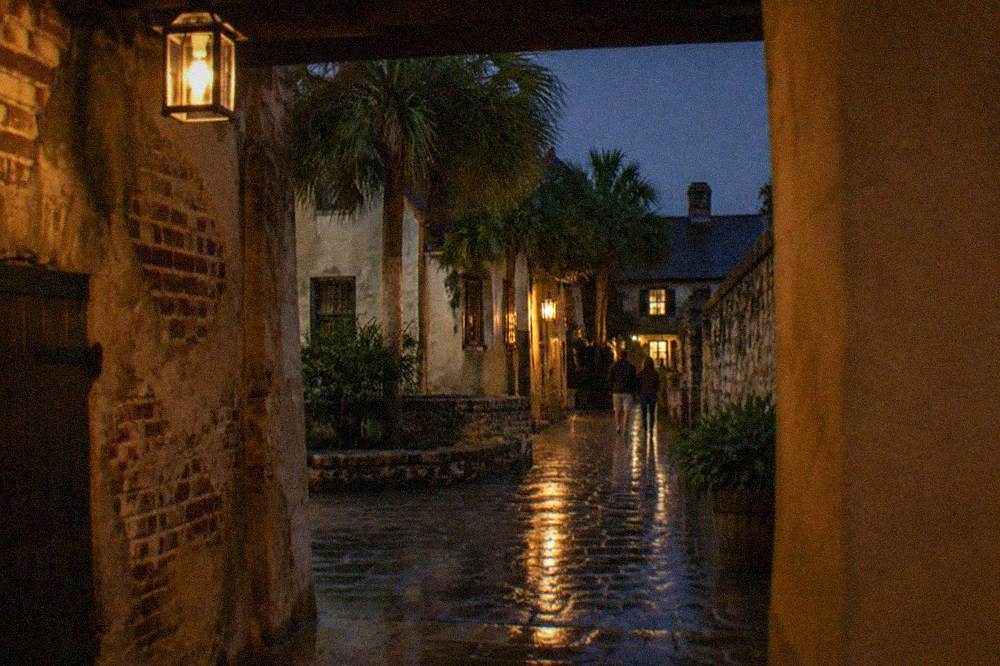
The British interlude added its own layer, and the return to Spanish control, then the eventual cession of Florida to the United States, meant the city changed flags without ever changing location. Each flag left garrisons, graveyards and grievances. When a ghost-tour guide in St. Augustine gestures at a wall and names a century, there is usually a real century underneath the gesture.
The modern walking products trace almost the same ground the sieges scarred. The 1.5-Hour Haunted Stroll by A Ghostly Encounter meets at 12 St George St, next to the Oldest Wooden Schoolhouse, from $30, and its 4.7 across 2,484 reviews makes it the most-reviewed tour on the roster. The 2.5-Hour Ghost Walk from Last Ghost Tour starts on Aviles Street and covers the longest route of the four walks, from $35. Both carry free cancellation on the listing, which matters in a coastal town where evening weather can turn quickly.
How Did Yellow Fever And Fires Feed The Legend?
St. Augustine and the surrounding region suffered repeated yellow-fever epidemics through the colonial and early American periods, alongside major fires in 1914 that destroyed much of the downtown business district. Mass graves, lost households and sudden deaths gave later storytellers their most poignant material, and the city's historic cemeteries still mark the scale of the losses.
Yellow fever is the epidemic that shaped the South's haunted imagination, and St. Augustine sat inside that belt. Outbreaks swept through Florida's port towns repeatedly, and St. Augustine's cemeteries and churchyards absorbed the dead in numbers that no single family plot was built for. The Tolomato and Huguenot cemeteries, both stops on many local tours, hold burials from these eras, and the guides' tales of fever victims wandering old lanes draw directly on that burial record.
The fires came later but hit harder in folklore terms. The 1914 blazes leveled large parts of the commercial district, and rebuilding layered new structures over old foundations, a combination ghost tours love: the building is new, the ground remembers. Between the epidemics and the fires, the city had accumulated what every haunted reputation requires, a large number of people who died badly in a small, walkable area.
None of that requires a verdict on the supernatural. The historical point is that St. Augustine has an unusually dense concentration of epidemic graves, fire sites, siege casualties and executions within about a square mile, and that concentration is the raw material. The ClickOrlando feature naming Florida's most haunted site is one recent example of that material being repackaged for a modern audience.
What Role Did The Old Jail And The Lighthouse Play?
The Old Jail, built in 1891 and operated as the county jail until 1953, records eight documented hangings on its site, and the St. Augustine Lighthouse carries legends of a keeper, Peter Rasmussen, and drowned children from a 19th-century tragedy. Both are featured on national paranormal television, and both anchor the city's haunted reputation more than any other single sites.
The jail's record is unusually concrete for a haunted landmark. It functioned as the St. Johns County jail for 62 years, closed officially for deplorable conditions, and hosted eight executions. Its own operators run roughly 30-minute daytime history tours departing every 15 to 20 minutes, with adult admission listed around $17-19, and a separate reservation-only "After Dark" paranormal event of about 2.5 hours priced around $95-106.50, an attraction-side product outside this site's roster. The hauntings themselves, inmates and a warden named in operator copy, are attributed claims, and the building's appearances on Ghost Hunters and Kindred Spirits gave it national standing.
The Lighthouse's story is the mirror image: a beautiful, well-run maritime museum with a legend attached. Museum ghost-tour copy and Ghost Hunters episodes describe shadow figures, footsteps on the tower stairs and voices, and Legends of America records the keeper and drowned-children legends. General admission runs roughly $14.95-17.95 for adults, with a 44-inch height minimum to climb the tower, and the museum runs its own after-hours "Dark of the Moon" events on select dates, again its own ticketed product rather than a bookable roster tour. Our St. Augustine Lighthouse hauntings guide covers that site in full.
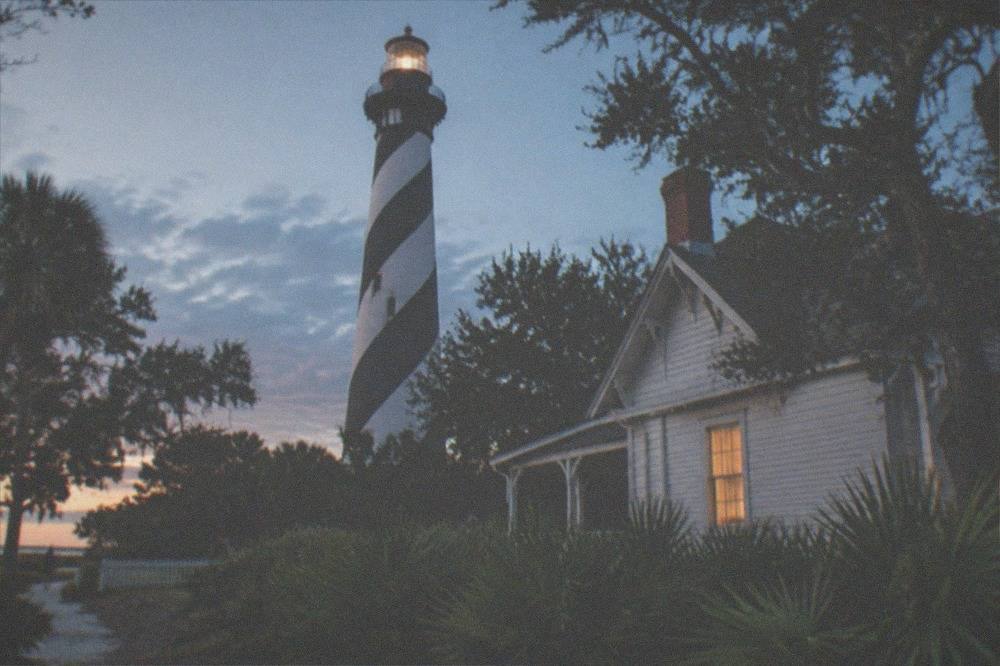
Put side by side, the three anchor sites show exactly how the city's reputation is built: a layer of hard record underneath, a layer of attributed legend on top.
| Site | The Verified Record | The Legend Layer (Attributed) |
|---|---|---|
| Castillo de San Marcos | Coquina bayfront fort, never taken by assault; $15 for ages 16+, under 16 free; first admission 9 a.m., last admission 5 p.m., closed Thanksgiving and Christmas | Spanish soldiers, a Seminole leader and a woman in white, attributed to operators and Legends of America; featured on Ghost Adventures |
| Old Jail | Built 1891, county jail until 1953; eight documented hangings; day tours about 30 minutes, admission roughly $17-19 | Former inmates and a warden, per operator copy and Legends of America; featured on Ghost Hunters and Kindred Spirits |
| Lighthouse | Maritime museum, hours commonly 9 a.m. to 6 p.m.; admission roughly $14.95-17.95 adult; 44-inch minimum to climb the tower | Lightkeeper Peter Rasmussen and drowned children, per museum ghost-tour copy and Legends of America; featured on Ghost Hunters |
Between them, these sites give the city something most haunted destinations lack: a set of nationally televised anchor hauntings within a short drive of each other, each attached to a real, documented, visitable historic structure. The reputation compounds because the sites are genuinely worth visiting even without the ghosts.
Who Turned The History Into A Tour Industry?
The storytelling layer is the newest part of the reputation and the part that maintains it: the city now supports one of the densest ghost-tour markets in the country, eleven bookable products across walking, hunting and vehicle formats, built by operators who discovered that a 450-year-old street grid makes an ideal walking route.
The storytelling tradition grew out of the historic-preservation movement that saved the coquina buildings and built the tourist economy, creating the physical stage. Operators then discovered that a colonial street grid, a fort, two historic cemeteries, a jail and a lighthouse add up to a walkable circuit no other American city can match, and the evening walking tour became the city's signature product.
The walking market alone now runs from tight to expansive. Walking options range from the 1-Hour Watchtower Walk at from $27 to the 2.5-Hour Ghost Walk at from $35, and the most-reviewed product on the market, the 1.5-Hour Haunted Stroll by A Ghostly Encounter, carries 4.7 across 2,484 reviews at from $30. Every product on the roster carries free cancellation on the listing.
| Tour | Duration | From | Rating and Reviews | Meeting Point |
|---|---|---|---|---|
| 1.5-Hour Haunted Stroll | 1.5 hours | $30 | 4.7 from 2,484 reviews | 12 St George St, by the Oldest Wooden Schoolhouse |
| 2.5-Hour Ghost Walk | 2.5 hours | $35 | 4.9 from 32 reviews | 3 Aviles St, by the Spanish Military Hospital Museum |
| 1-Hour Watchtower Walk | 1 hour | $27 | 4.6 from 11 reviews | 215 St George St |
| 1.5-Hour Dead Walk | 1.5 hours | $26 | 4.1 from 5 reviews | Heritage Walk Mall entrance on St George St |
The hunt side of the market goes further than storytelling. The 2-Hour Paranormal Investigation by GhoSt Augustine, from $30 and 4.9 from 83 reviews, hands guests real EMF meters and paranormal equipment inside the Heritage Walk Mall; the same operator's Dixie House Ghost Hunt, from $59.90 and 4.9 from 43 reviews, sells a ticketed investigation of a single house. The vehicle side adds the Open-Air Haunted Trolley at 4.2 across 1,174 reviews from $36 and the Golf Cart Ghost Tour at 4.6 across 321 reviews from $39, while the pub side splits between the Haunting Hour Pub Crawl, from $59 with drinks included in the fare, and the Ghost City Pub Crawl, from $35 with drinks purchased at the stops.
That scale matters for the "known for" question. A reputation needs maintenance, and St. Augustine's gets maintained nightly, by multiple competing companies, in a compact downtown where a visitor can take a walking tour, a trolley tour, a pub crawl and a ghost hunt in a single weekend without repeating a route. Few cities anywhere sustain that density, and the density itself signals to visitors that this is a place where ghosts are the local industry.
Where Do The Tours Actually Walk?
Nearly every bookable ghost product stages itself inside a few blocks of the colonial core: three walking tours meet on or just off St. George Street, one gathers on Aviles Street, and the three hunts stage from the Heritage Walk Mall, a corner on Columbus Street and the lot behind the Lightner Museum. The whole market runs on a street grid older than the United States.
The clustering is striking when you plot it. Three of the four walking products start on St. George Street itself: the 1.5-Hour Haunted Stroll at number 12 beside the Oldest Wooden Schoolhouse, the 1-Hour Watchtower Walk at 215, and the 1.5-Hour Dead Walk at the Heritage Walk Mall entrance. The 2.5-Hour Ghost Walk gathers at 3 Aviles Street, in front of the Spanish Military Hospital Museum, one block off the pedestrian spine. A visitor staying anywhere in the colonial core can reach any of the four in a few minutes on foot, and route and booking details sit on the 1.5-Hour Haunted Stroll tour page.
The hunts and vehicles ring the same core. The 2-Hour Paranormal Investigation meets inside the Heritage Walk Mall at 162 St George St, Suite 19; the Dixie House Ghost Hunt starts at the corner of Columbus St and S Dixie Hwy; the Night Among Ghosts Hunt gathers in the parking lot behind the Lightner Museum, by the statue on Granada St. The Golf Cart Ghost Tour picks up on the east side of Constitution Plaza by the Slave Market, and the Open-Air Haunted Trolley leaves from the San Marco Welcome Center. Density like this is why the reputation feels unavoidable: the haunted city and the visiting city occupy the same dozen blocks.
Timing and parking shape the experience as much as the route. Sunset moves with the season, roughly 7:20 to 7:22 p.m. in late September, closer to 8:30 p.m. around the June solstice and 5:25 to 5:37 p.m. around the December solstice, so "after dark" starts two to three hours apart across the year. The Historic Downtown Parking Facility at 1 Cordova St, next to the Visitor Information Center, charges $5 per entry for the 5-to-9 p.m. window and $20 for the 7 a.m. to 5 p.m. peak, across roughly 1,200 spaces, and most city pay stations stop enforcing at 9 p.m. Hurricane season runs June 1 to Nov 30 with an August-to-October peak, and operators run their evening tours rain or shine, cancelling only for lightning, flooding or unsafe conditions, with rebooking or a refund in that case. The stories do not take a night off, and neither does the schedule that carries them.
Is The Reputation About History Or About Marketing?
Both, and honestly so. The documented record, sieges, epidemics, fires, hangings and a 450-year occupation, is real and unusually dense. The named apparitions attached to that record are attributed legends told by operators and legend-keepers. The city's reputation comes from the second layer being built directly on top of the first, with no gap between the history and the storytelling.
This is the distinction that separates St. Augustine from invented haunted destinations. A ghost story needs a plausible substrate, and here the substrate is verified: the National Park Service confirms the fort's operating record, the Old Jail's operators confirm the 1891-1953 run and the eight hangings, and the region's epidemic and fire record is standard Florida history. The legends are the interpretive layer, and the honest operators say so, attributing their tales to guides' tellings and legend sources rather than to settled fact.
Television did much of the amplification. The Castillo appeared on Ghost Adventures, the Old Jail on Ghost Hunters and Kindred Spirits, and the Lighthouse on multiple Ghost Hunters investigations that referenced shadow figures, footsteps and EVP recordings. Exposure of that kind converts a local legend into a destination claim: viewers arrive already knowing the sites by name, and the tour market gives them eleven ways to stand on the spots, with the ClickOrlando feature simply the pattern in its current form, old material handed to a new audience.
| Format | Products on the Roster | Price Span | Examples |
|---|---|---|---|
| Walking ghost tours | 4 | $26 to $35 | 1.5-Hour Haunted Stroll; 2.5-Hour Ghost Walk |
| Ghost hunts with equipment | 3 | $30 to $59.90 | 2-Hour Paranormal Investigation; Dixie House Ghost Hunt |
| Trolley, cart and pub | 4 | $35 to $59 | Open-Air Haunted Trolley; Golf Cart Ghost Tour |
For readers who want the full haunted-site rundown rather than the history, our most haunted place in St. Augustine piece ranks the individual sites. For those weighing whether an evening walk is worth the ticket, the question is less about whether the ghosts are real and more about whether four centuries of retold history, delivered on the original streets, is worth $30. On that measure the city rarely disappoints, which is exactly why the reputation keeps compounding.
The marketing amplifies but does not fabricate. When St. Augustine Ghost Tours lists eleven distinct products, it is listing eleven variations on a genuinely deep historical record, from the 1.5-Hour Haunted Stroll's broad circuit to the 1-Hour Watchtower Walk's tight, cheap sampler. The stories change with the operator, the streets do not.
Whether a visitor arrives for the history or for the hauntings, the two arrive together in St. Augustine. The sieges, the fever graves, the hangings and the fires are the city's own record; the named ghosts are the century of storytelling laid over it. That partnership between a documented past and a practiced nightly performance is the honest answer to why this city, of all American cities, is the one known for ghosts.
Common Questions About Why St. Augustine Is Known For Ghosts
Why do they say st. augustine is haunted?
Because the city's documented history is unusually dense with death and upheaval: colonial sieges, yellow-fever epidemics, mass casualties in port-town outbreaks, a jail with eight documented hangings, and repeated fires, all compressed into a walkable colonial core. Guides and legend sources attached named apparitions to that record, and the nightly tour industry keeps the stories in circulation.
What is the oldest city in the United States?
St. Augustine, founded by Spain more than 450 years ago, is the oldest continuously occupied European-founded settlement in the present-day United States, predating the English settlements at Jamestown and Plymouth by decades.
What city in Florida is known for ghosts?
St. Augustine is the city in Florida most associated with ghosts, anchored by the Castillo de San Marcos, the 1891 Old Jail and the Lighthouse, all three featured on national paranormal television. A 2025 ClickOrlando feature ranked one of its sites among the most haunted places in Florida.
Are the ghost stories in St. Augustine based on real history?
Partly. The sieges, epidemics, fires, the jail's 1891-1953 operation and its eight documented hangings are verified history. The specific apparitions, the soldiers, the woman in white, the lighthouse keeper, are legends attributed to tour operators, museum ghost-tour copy and sources like Legends of America, not settled fact.
How many ghost tours operate in St. Augustine?
The bookable market includes eleven distinct products: four walking tours from $26 to $35, three ghost hunts with real equipment from $30 to $59.90, and four trolley, cart and pub products from $35 to $59, totaling 4,295 reviews across the roster.